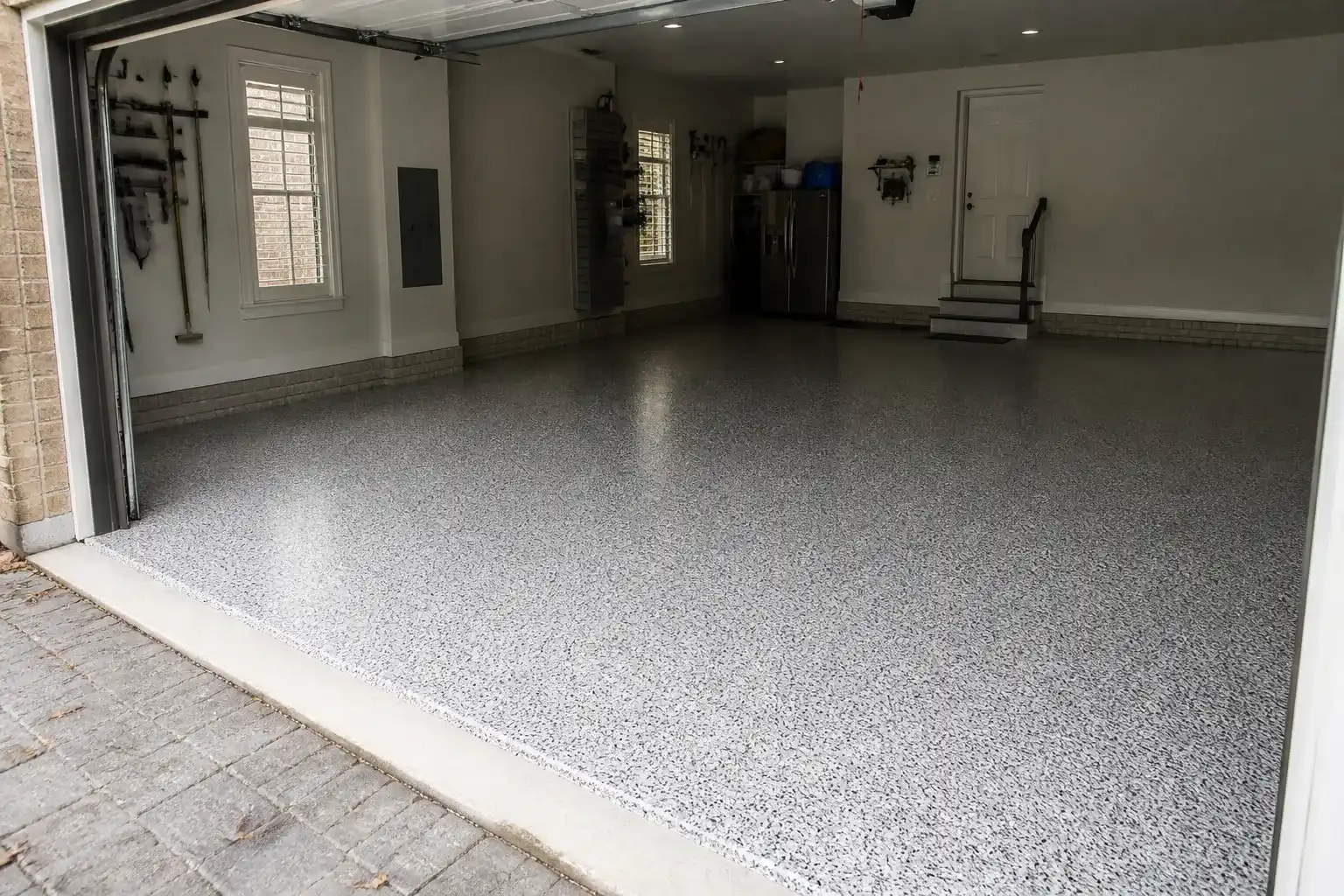
Alpharetta Floor Coating installs garage, concrete and industrial floor coatings for homeowners and businesses across Alpharetta, GA. Basements can be excellent candidates for a clean, finished concrete floor, but moisture should be part of the plan from the start. Because basement slabs sit below grade, they may be affected by groundwater, drainage, indoor humidity, vapor moving through concrete, or previous water events.
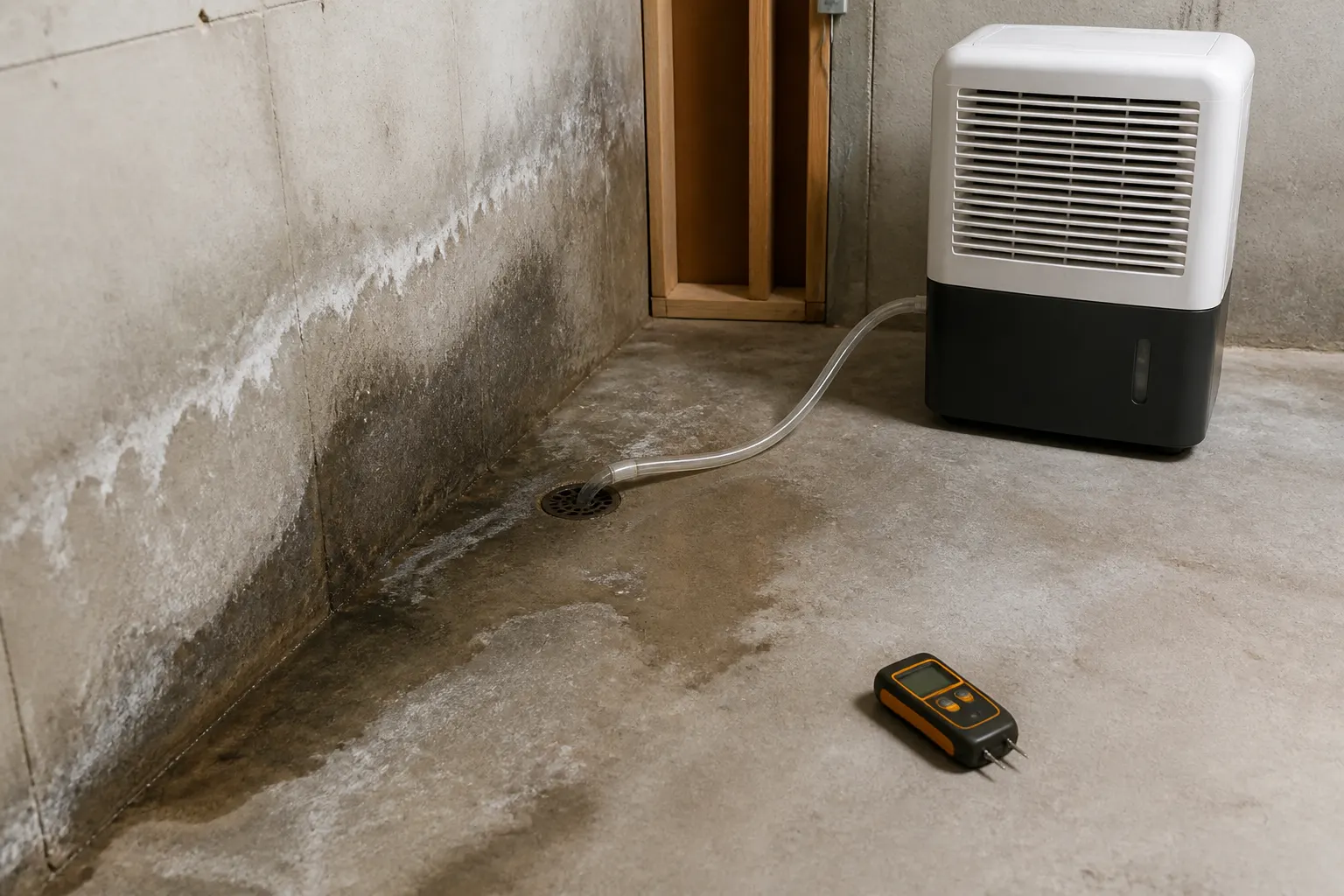
Look for visible clues
Musty odors, efflorescence, darkened concrete, peeling paint, damp carpet edges, and past water stains are useful clues. Efflorescence is a powdery mineral deposit that can appear as moisture moves through masonry or concrete. These signs do not identify the precise cause on their own, but they are reasons to investigate before installing a coating, flooring, or finished wall system.
Find active water entry first
A coating is not a cure for active water intrusion. If a basement floods, leaks at a wall, or receives water from a plumbing issue, that source should be corrected before a floor coating is considered. Exterior grading, gutters, downspouts, foundation drainage, and plumbing are all possible factors. Addressing the source protects the entire basement, not just the appearance of the floor.
Concrete can transmit vapor
Even when there is no visible leak, vapor can move through a concrete slab. This is why a dry-looking basement floor still deserves an evaluation. The appropriate testing method and acceptable condition depend on the coating system. A professional can inspect the space, review any history of moisture concerns, and determine whether the slab is suitable for the planned finish.
Preparation still matters
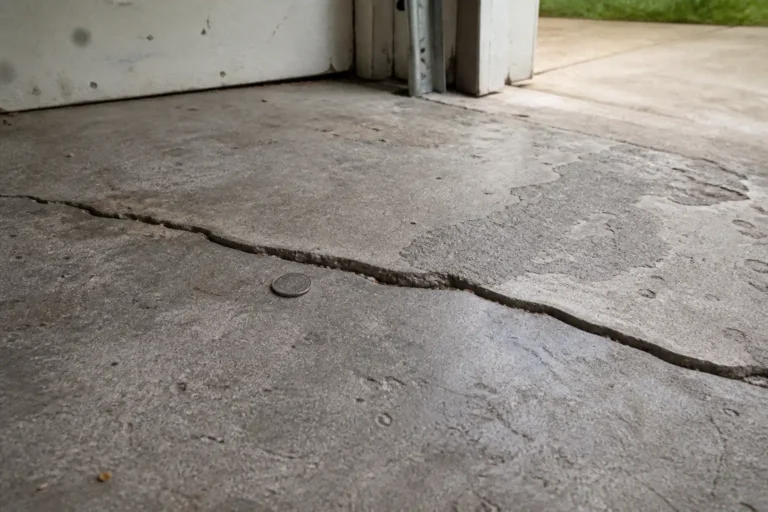
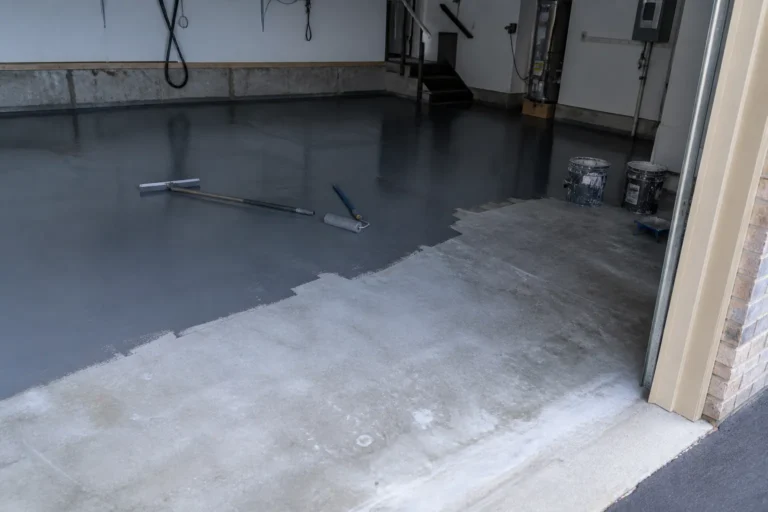
After moisture concerns have been evaluated, the floor needs sound preparation. Old coatings, adhesives, contaminants, and weak surface material should be addressed. Cracks and damaged areas may need repair. Mechanical preparation creates the surface profile that a coating system needs to bond properly. Rushing directly to a finish without considering the slab can create a more difficult repair later.
Choose a finish for the room
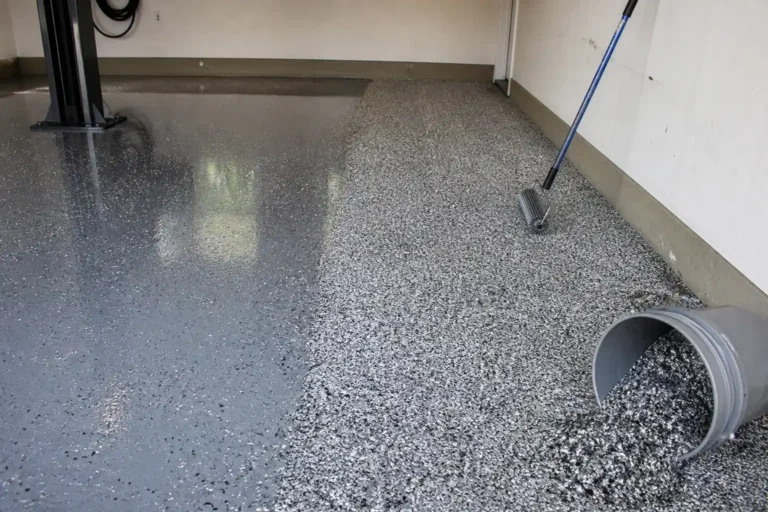
Think about how you plan to use the basement. A utility room, home gym, storage area, workshop, and finished recreation room each have different needs. Color, texture, cleaning requirements, and the amount of expected traffic can guide the selection. A decorative flake floor can add depth and visual interest, while a simpler finish may fit a functional area. The best option balances appearance with the condition of the concrete.
Alpharetta Floor Coating can help evaluate your basement floor and discuss coating options after the moisture picture is clear.
Water that comes from outside
Heavy Georgia rain can find its way to a basement slab. Look for gutters that overflow, downspouts that empty close to the wall, and soil that slopes toward the house. Fixing these outside problems costs less than most basement repairs and helps any new floor last longer.
Easy checks you can do
- Look for white mineral stains on the floor or walls.
- Check for a musty smell after a rainy week.
- Tape a clear plastic sheet to the floor for a day and see if moisture appears under it.
These checks are only clues. They do not replace proper moisture testing, but they can tell you whether to ask for one.
Plan the finish for the room
A finished basement, a workshop, and a storage room have different needs. Tell your installer how you plan to use the space so they can pick a system that fits.
What to do if you find moisture
Do not coat over it and hope. Start by finding the source. It could be a leak, poor drainage, or vapor coming through the slab. Fixing the source is the best first step. After that, ask for proper moisture testing and a system made for the reading you get. Sometimes the right move is to wait for the slab to dry.
Do not forget the walls and drains
Look at the base of the walls, around floor drains, and near the sump area if you have one. Moisture often shows up there first. Mention these spots to your installer so they can plan around them.
Talk to your installer early
Share any history of leaks or flooding right away. It helps them plan tests and pick a system made for the room. Do not wait until the day of the job to bring it up.