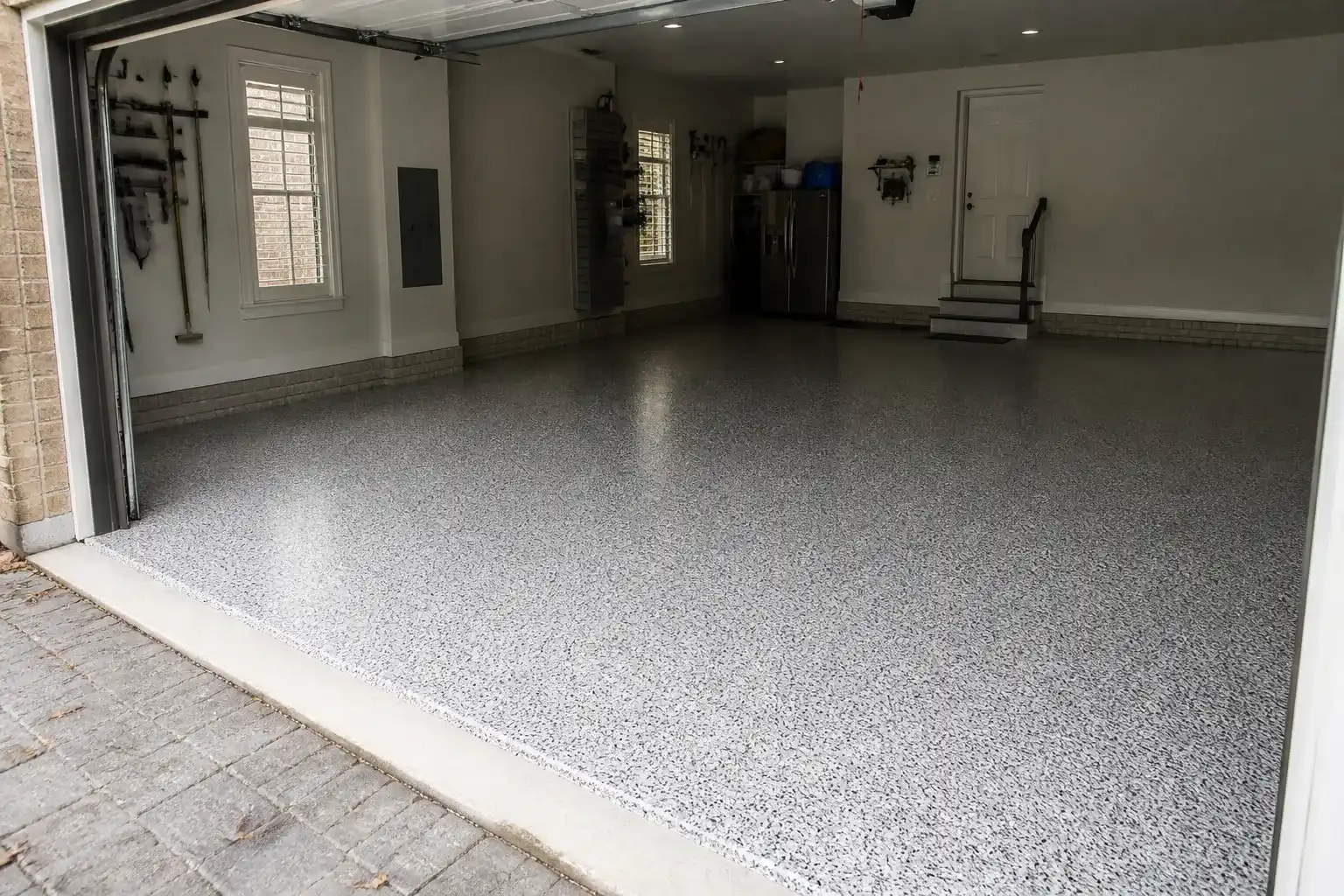
Alpharetta Floor Coating installs garage, concrete and industrial floor coatings for homeowners and businesses across Alpharetta, GA. When a garage floor looks bad enough to bother you, two very different fixes get suggested. One is a coating, which treats the surface. The other is replacement, which means breaking out the slab and pouring a new one. They differ enormously in cost, disruption, and what problem they actually solve.
The deciding question is not how bad the floor looks. It is whether the concrete is still structurally sound.
The difference between surface damage and structural failure
Surface damage
Surface problems live in the top layer of the slab. The concrete underneath is doing its job, but the wearing surface has broken down. This covers most garage floors people are unhappy with.
- Dusting concrete that never stays clean
- Spalling, where thin flakes pop off the top
- Pitting and shallow craters
- Oil, fertilizer, and tire staining
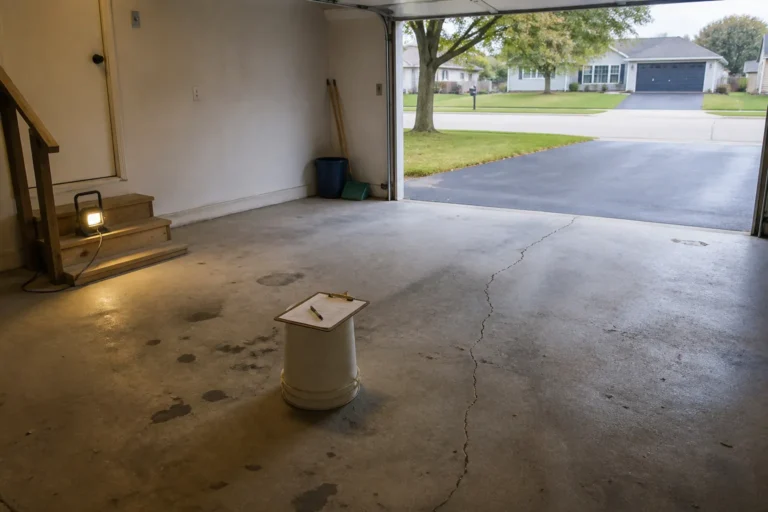
- Hairline and shrinkage cracks that are not moving
- Old paint or a failed DIY kit peeling up
Structural failure
Structural problems mean the slab itself is compromised. Coating over these hides them briefly and solves nothing.
- Cracks wider than a credit card, especially with vertical displacement
- Sections that have settled, tilted, or heaved
- Cracks that keep widening season after season
- Hollow sounding areas that suggest voids beneath the slab
- Crumbling that goes deep rather than flaking off the top
- Standing water from grade changes the slab no longer matches
When coating is the right answer
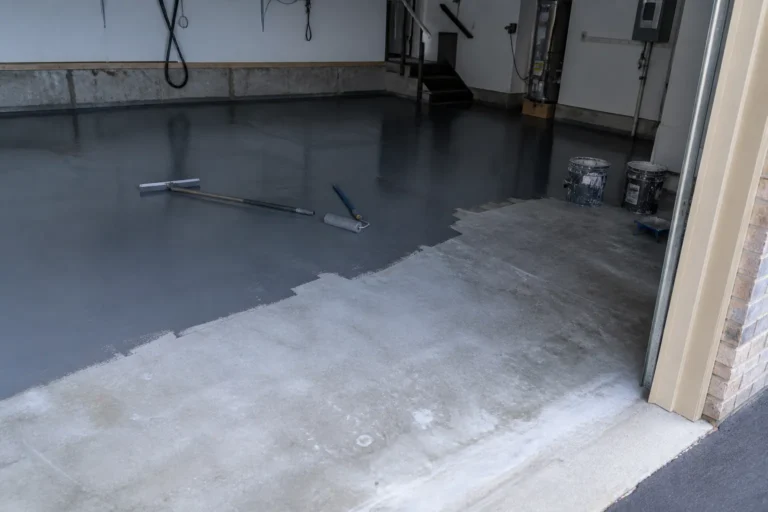
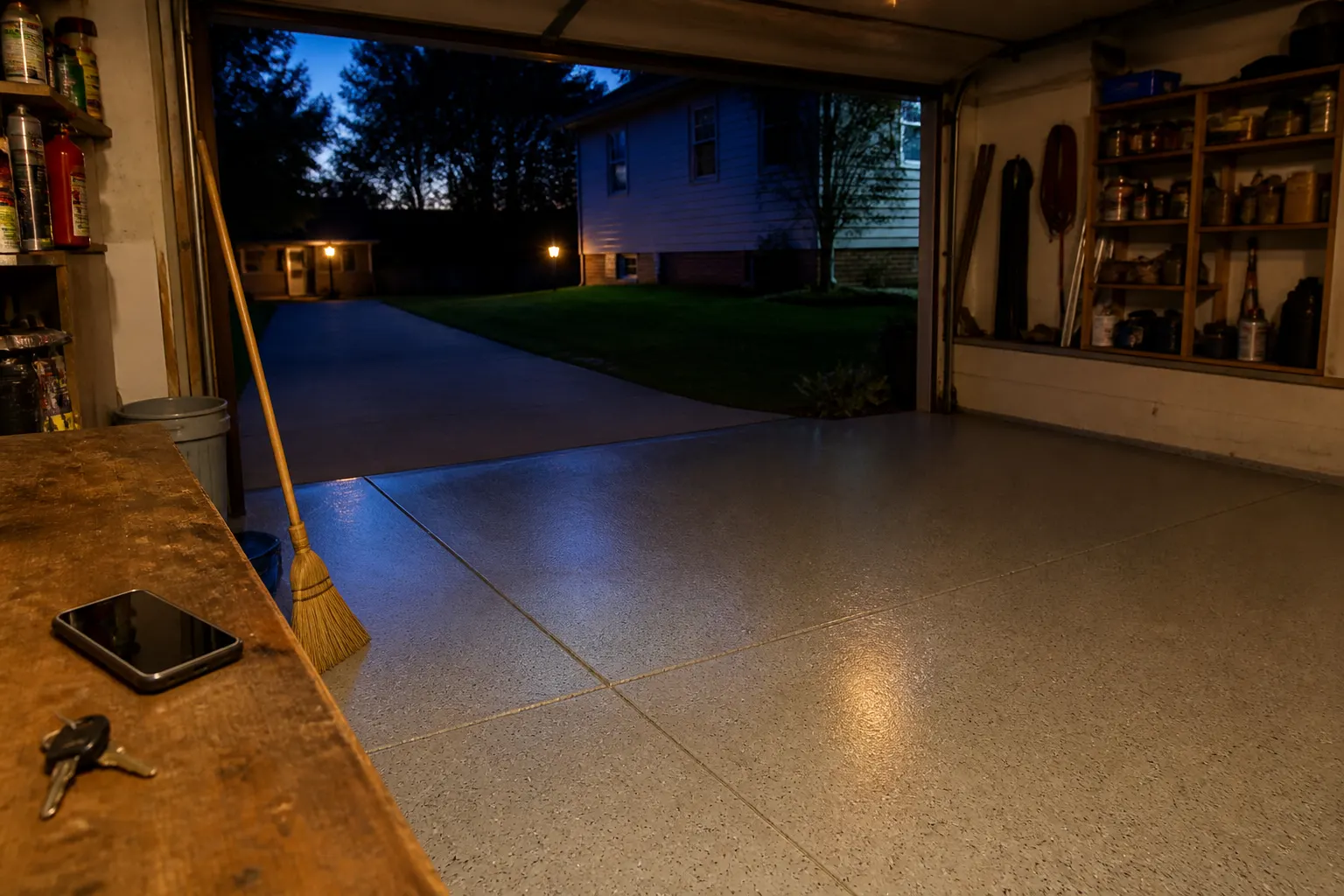
If the slab is sound, coating is almost always the better value. You keep the existing concrete, the project takes days rather than weeks, and you end up with a surface that resists the things that ruined the last one. A properly installed system seals the concrete so it stops dusting, resists stains, and cleans up with a mop.
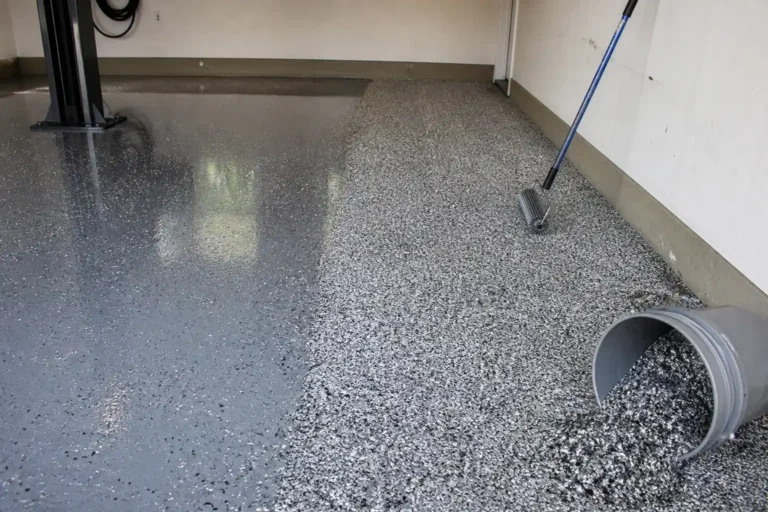
Coating also lets you change how the space feels. Flake systems hide dirt and add traction. Polyaspartic and polyurea systems cure quickly and hold color under sun exposure. None of that is available with bare concrete, new or old.
The middle option most people do not know about
There is a step between coating and replacement. If the top layer has broken down but the slab is structurally fine, garage floor resurfacing rebuilds the wearing surface, then a coating goes over it. This handles floors that look too far gone for a coating but do not need a new slab.
When replacement is genuinely necessary
Replacement makes sense when the slab can no longer do its structural job. That usually means settlement, heaving, deep cracking with movement, or a slab that was poured over inadequate base material and is now failing across large areas. Drainage problems that require re-sloping the floor also call for a new pour.
Replacement is a construction project. The old slab is demolished and hauled away, the base is prepared, new concrete is poured, and then it has to cure before anything can be applied to it. Expect weeks of disruption rather than days, and expect the garage to be unusable for most of it.
Cost and disruption compared
Coating a garage floor is priced per square foot and typically runs in the single digits per square foot installed depending on the system and the preparation required. Replacing a slab involves demolition, disposal, base work, concrete, and finishing, and it is a significantly larger number before any finish is applied.
There is also a hidden cost in replacement. A new slab still needs to cure before it can be coated, and bare new concrete will start absorbing stains the day you park on it. Many people who replace a slab end up coating it anyway, which means paying for both.
How to tell which one you need
Things you can check yourself
- Look at crack width and offset.
Hairline cracks with both sides level are usually a surface issue. A crack you can fit a coin into, or one where one side sits higher, deserves a closer look.
- Tap around suspicious areas.
A hollow sound can indicate a void or delamination under the surface.
- Watch it over a season.
A crack that is the same in July and January is likely stable. One that opens and closes is moving.
- Check the doors and walls.
Gaps at the base of walls or a door that no longer closes cleanly can point to settlement rather than a floor problem.
What a professional assessment adds
We check moisture in the slab, test the soundness of the surface, look at joints and edges, and identify what is already on the concrete. Concrete floor repair handles crack and joint issues that sit between cosmetic and structural. If the floor genuinely needs replacing, we say so rather than selling a coating that will not last.
Frequently asked questions
Can you coat a cracked garage floor?
Stable, non-moving cracks can be repaired and coated. Cracks that move with the slab need to be evaluated, because no coating holds a moving joint closed permanently.
Will a coating fix an uneven floor?
Resurfacing corrects surface irregularities and low spots. Real slope or settlement is a structural issue and is not solved by adding material on top.
Is it worth coating an old garage floor?
Age alone is not the problem. Plenty of thirty year old slabs are sound and coat beautifully. Condition is what matters.
How long does each option take?
Most coating projects are measured in days, including preparation. Replacement runs into weeks once demolition, pouring, and cure time are counted.
Should I coat a brand new slab?
New concrete needs to cure first, usually a month or more. After that, coating a new slab before it gets stained is a sensible move rather than an afterthought.
What if only part of the floor is bad?
Partial repair is often possible. We look at whether the damaged area can be rebuilt and blended, which is usually less costly than treating the whole floor as a loss.
Find out which one your floor needs
Most garage floors that look ready for replacement only need their surface rebuilt. Call +14706844629 for an honest assessment of your slab in Alpharetta or the surrounding North Atlanta area, and we will tell you which option actually fits.