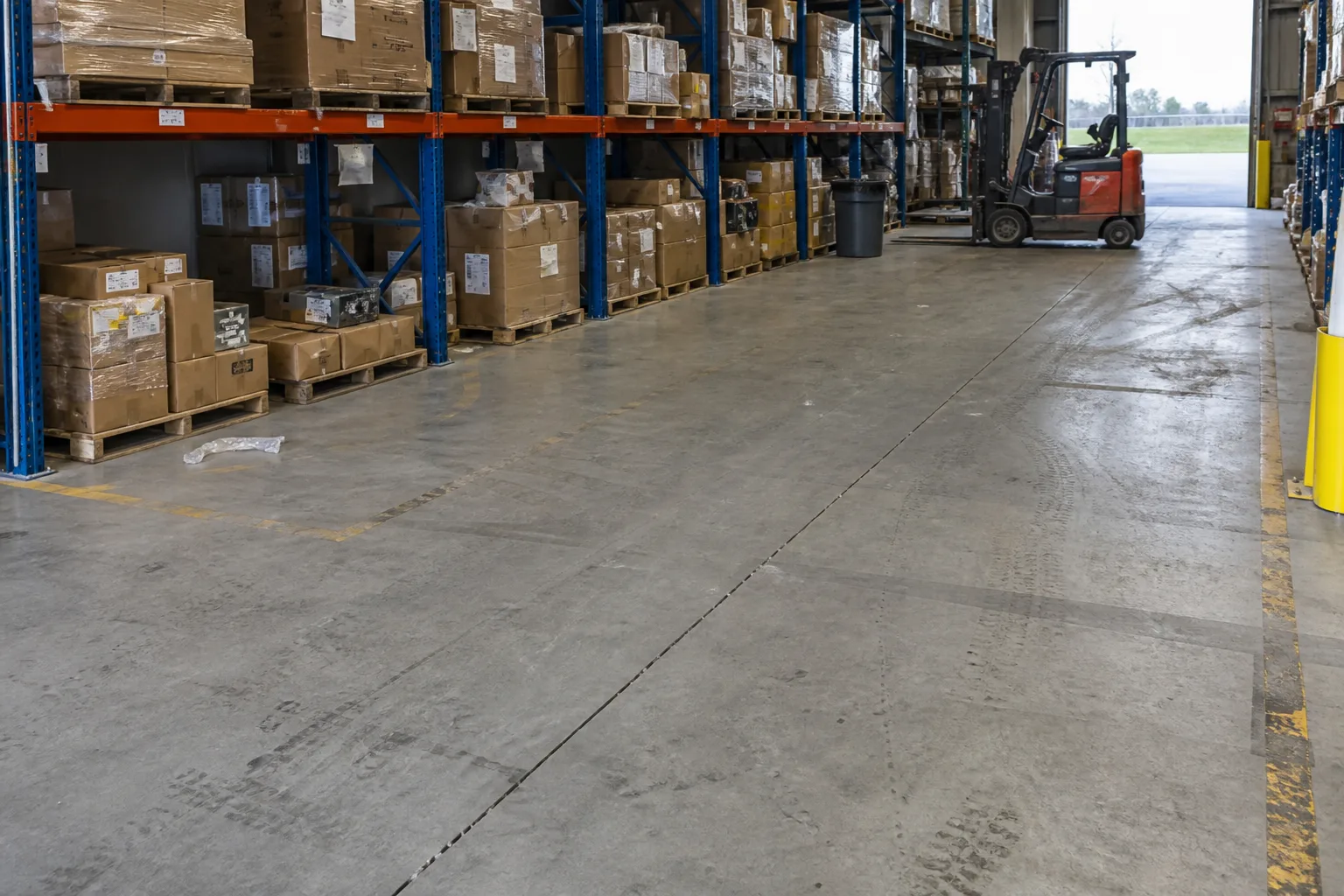
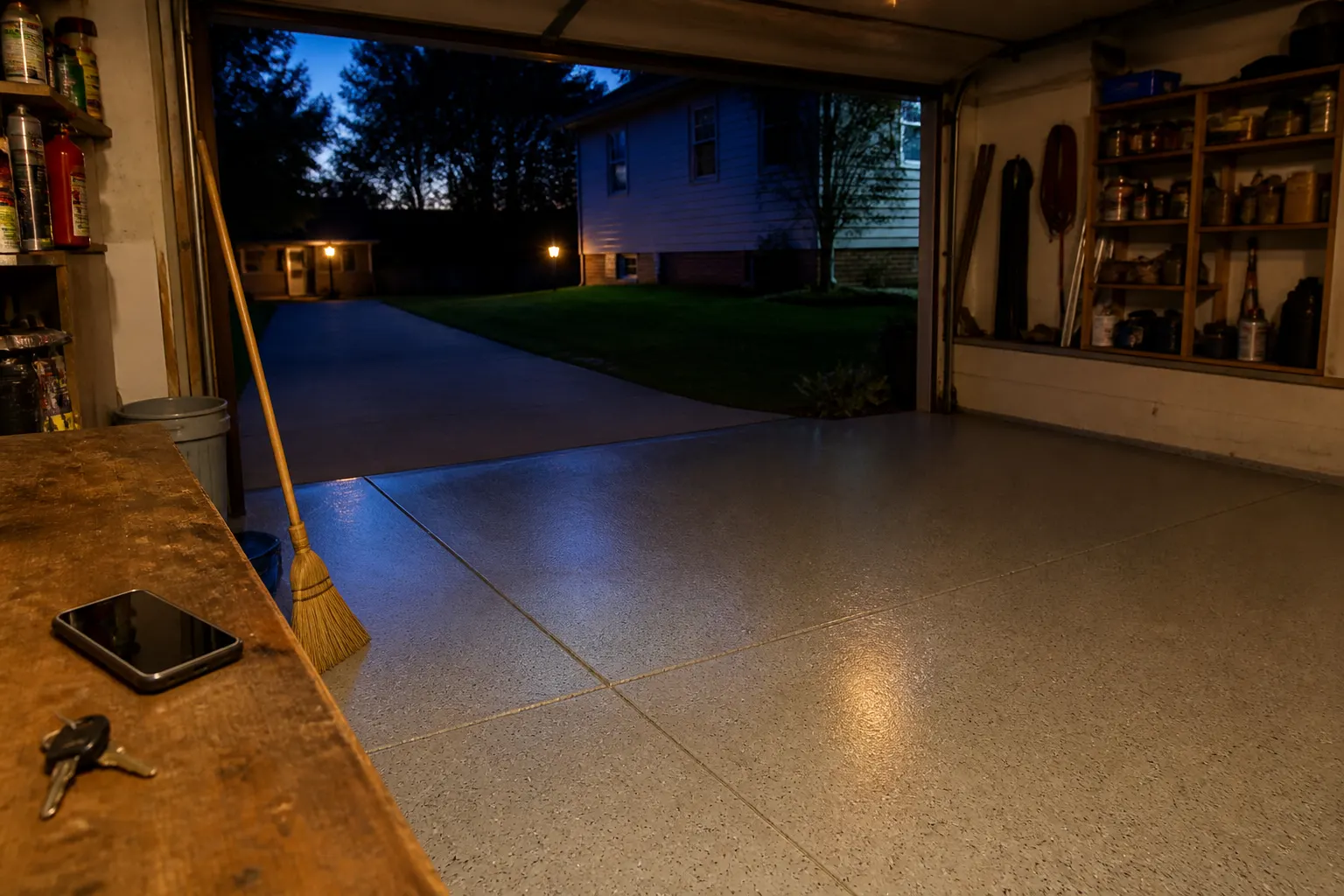
An industrial floor is a working asset. It carries forklifts, pallet jacks, racking loads, wash down water, and whatever the process spills on it. When the coating on that slab fails, the cost is not the coating. It is the downtime needed to fix it.
Industrial concrete floor coatings start with the concrete rather than the product catalog. Alpharetta Floor Coating tests and prepares the slab, then specifies a system with the thickness, chemistry, and texture the facility actually needs. For a broader look at applications by area, see our industrial floor coatings page.
This page covers how a heavy duty system is specified around the concrete slab. If you would rather browse by the type of space, such as warehouses, workshops, or production areas, see industrial floor coatings.
Start with the slab, not the product
Two facilities can order the same coating and get completely different results because their concrete is different. Age, mix, finishing method, moisture history, and previous treatments all change what will bond and how long it holds.
What we assess before specifying
- Compressive strength and surface soundness of the slab
- Moisture vapor movement, especially in slabs poured without a vapor barrier
- Existing coatings, curing compounds, and hardeners
- Contamination from oil, coolant, and process chemicals
- Condition of control joints, construction joints, and cracks
- Slope, drains, and how water leaves the floor
Moisture is the most common cause of failure
Georgia humidity and older slab construction combine to push vapor up through concrete. A system installed over an untested slab can blister, bubble, or delaminate months later, often in the exact areas that matter most. Testing is inexpensive compared with recoating a production floor, so we test first and use a moisture mitigation primer when the numbers call for one.
Matching build and chemistry to the work
Thin film systems
Roller applied systems suit storage areas, light assembly, and spaces where appearance and dust control matter more than impact. They go down quickly and return to service fast.
Broadcast and mortar systems
Where wheel traffic, impact, or thermal shock is a factor, a heavier build makes sense. Quartz or flake broadcast systems and troweled mortars add thickness and resilience that a thin film cannot match.
Chemical and thermal exposure
Battery charging areas, wash bays, and process zones each have their own exposure profile. Epoxy handles many chemicals well, while urethane and polyurea topcoats add abrasion, UV, and temperature tolerance. The topcoat is usually where the real protection sits.
Joints, transitions, and safety details
Joints move, and a coating bridged across a moving joint will crack in a straight line. We treat control joints and construction joints as their own detail rather than coating over them. Ramps, dock edges, and aisle boundaries get the same attention, including slip resistant texture and colored aisle marking where traffic patterns call for it.
Working around production
Most facilities cannot shut down for a floor. Work is sequenced in bays or zones, with containment between active and coated areas and cure times planned against shift schedules. Fast cure chemistries make weekend and overnight turnarounds realistic when the schedule is tight.
Industrial Concrete Floor Coatings FAQ
How is this different from a commercial floor coating?
Industrial systems are specified around load, chemical exposure, and cleaning method rather than appearance. Build thickness and topcoat chemistry usually step up accordingly.
Can you coat a floor that forklifts run on all day?
Yes, with a system built for it. Wheel traffic calls for adequate thickness and a topcoat chosen for abrasion resistance.
What if the slab has old coatings and oil soaked in?
Both come off during concrete surface preparation. Deeply contaminated areas may need to be cut back and rebuilt before the system goes down.
Do you handle damaged or spalled industrial slabs?
Yes. Surface damage is addressed through concrete floor resurfacing so the coating sits on sound material.
Can the floor include safety markings and zones?
Color banding, aisle lines, and texture changes can be built into the system rather than painted on afterward, which makes them far more durable.
How disruptive is installation?
It depends on the size of the area and the system. We plan the sequence with your operations team so sections come back into service in a predictable order.
Specify a floor that fits the facility
The right industrial floor starts with an honest look at the concrete and the work happening on it. Call +14706844629 to discuss industrial concrete floor coatings in Alpharetta and the surrounding North Atlanta area.
Most jobs here involve more than one surface. Property owners planning industrial concrete floor coatings often look at concrete floor coating and concrete floor repair, and it is worth looking at concrete floor resurfacing too.
We coat floors across metro Atlanta, including Dunwoody, Woodstock and Buford. If you are still weighing options, Concrete Patio Coatings: Options for Alpharetta Homeowners covers the background.
Related links
 Google Reviews