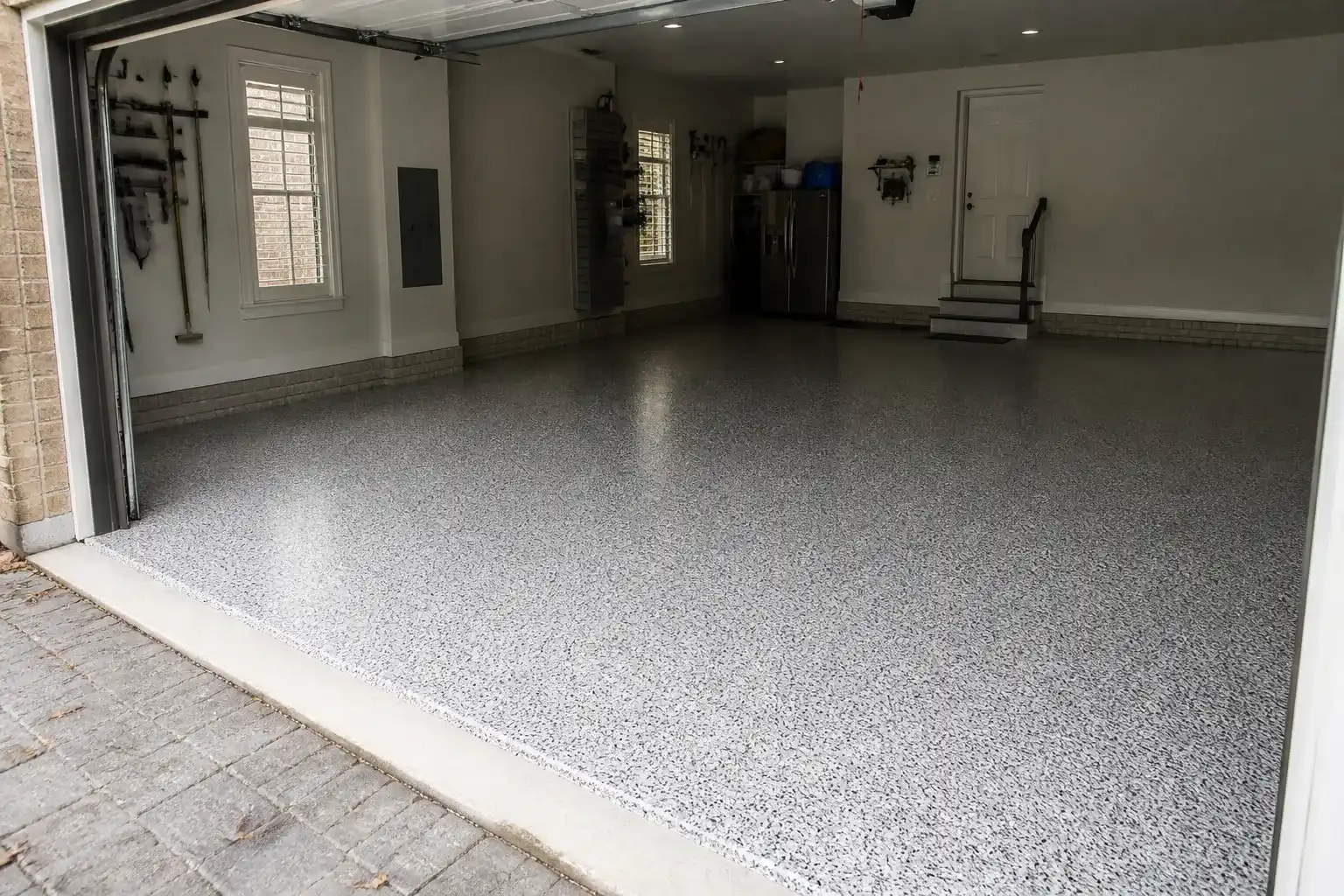
Alpharetta Floor Coating installs garage, concrete and industrial floor coatings for homeowners and businesses across Alpharetta, GA. Polyurea sits in the middle of the floor coating market. It costs more than standard epoxy, usually a little less than polyaspartic, and it is often the base coat under a polyaspartic topcoat rather than a system used on its own.
If you are weighing quotes for an Alpharetta garage, basement, or shop floor, here is what polyurea actually costs and what moves that number.
Typical polyurea floor coating cost
Industry cost guides put professionally installed polyurea coatings at roughly five to ten dollars per square foot. Material alone accounts for about three to five dollars of that, with labor making up the rest depending on how much preparation the slab needs.
Cost by garage size
- One-car garage, 200 to 250 square feet: roughly $1,000 to $2,500
- Two-car garage, 400 to 500 square feet: roughly $2,000 to $5,000
- Three-car garage, around 750 square feet: roughly $3,750 to $7,500
Treat these as budgeting ranges. A slab in rough shape can push a project past the top of the band, and a large clean floor can come in under it.
What polyurea is and why it is priced this way
Polyurea cures very fast and stays flexible, which is why it is widely used as a base coat. That flexibility lets it move with concrete as temperatures change, which reduces cracking at joints and stress points. The tradeoff is a short working window, so the crew has to be organized and experienced. Labor rates reflect that.
Base coat and topcoat systems
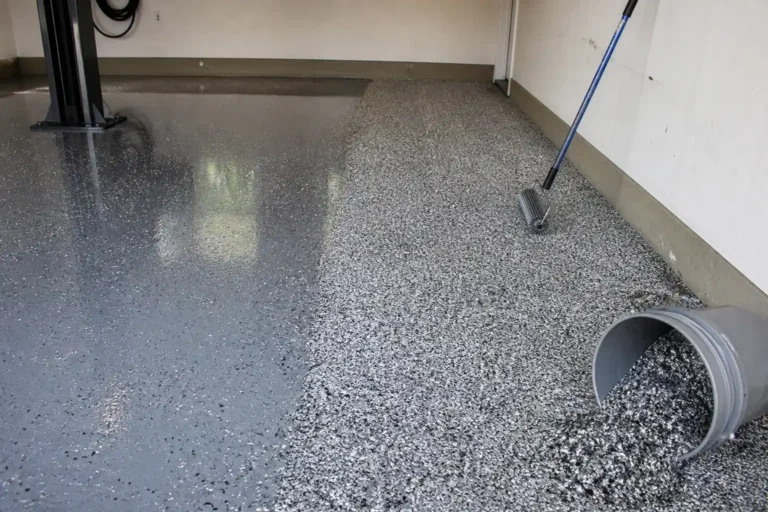
Most quality garage systems are not a single product. A common build is a polyurea base coat, a flake broadcast, and a polyaspartic or urethane topcoat. When you compare quotes, compare the build, not the headline product name. Our polyurea floor coating page explains where it fits in a system.
The factors that move a polyurea quote
Surface preparation
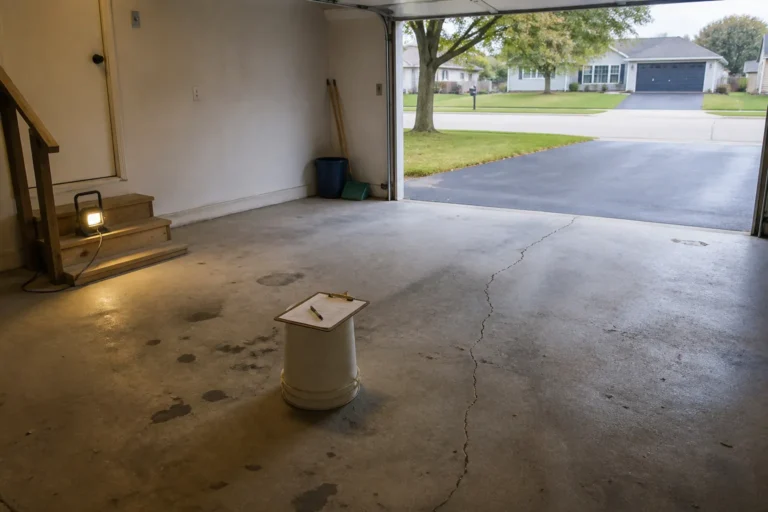
As with every coating, this is the biggest variable. Mechanical grinding, coating removal, adhesive removal, and profiling take time, and that time is the majority of many quotes. Concrete surface preparation is the line item worth scrutinizing on every bid you receive.
Slab repairs
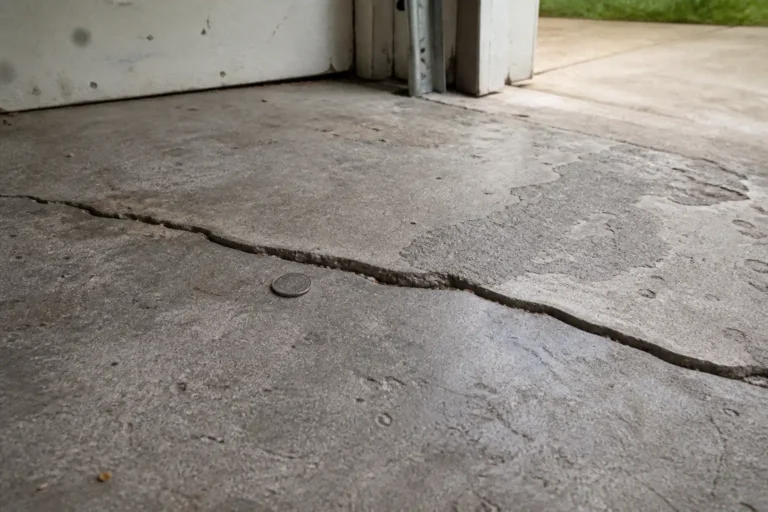
Cracks, spalls, pitting, and damaged control joints all need attention before coating. If the top of the slab has failed, concrete floor resurfacing is added to the scope and the price moves accordingly.
Moisture conditions
North Georgia humidity and below grade slabs push vapor up through concrete. Testing is cheap. Mitigation, when needed, adds cost but protects the whole investment.
Number of coats and thickness
A two-coat system costs less than a three-coat system with a heavier build. Ask what total film thickness you are getting, not just how many buckets are involved.
Decorative and texture choices
Flake blends, color changes, and anti-slip aggregate each add material and steps. In wet or sloped areas a slip resistant finish is a practical addition rather than a luxury.
Access and site conditions
A garage that has to be emptied, a basement with awkward stairs, or a facility that can only be worked on in off hours all add hours to the job.
Polyurea compared with epoxy and polyaspartic
Epoxy generally comes in lowest, often quoted around four to ten dollars per square foot installed. Polyurea sits above it. Polyaspartic typically sits highest, commonly five to twelve dollars per square foot.
What you get as you move up the scale is faster return to service, better UV stability, and better flexibility over concrete that moves. What you give up is a little budget headroom. For a basement with no sunlight and no rush, epoxy may be the right call. For a garage that gets afternoon sun and needs to be usable quickly, a polyurea based system is often the better fit.
Reading a polyurea quote properly
- How is the concrete being prepared, and with what equipment?
- Is moisture testing included before installation?
- What is the coat-by-coat build, and what is the total thickness?
- Is the topcoat polyaspartic, urethane, or more polyurea?
- Are crack and spall repairs included or billed later?
- What is the return-to-service schedule for foot and vehicle traffic?
Two quotes that both say polyurea can describe very different floors. These questions surface the difference before you sign rather than after.
Frequently asked questions
Is polyurea better than epoxy?
It is different rather than automatically better. Polyurea cures faster and stays more flexible. Epoxy builds thickness economically and handles many chemical exposures well. The right answer depends on the space and the schedule.
Can polyurea be installed in cold weather?
It performs across a wider temperature range than epoxy, which is one reason it is used in unheated garages and outbuildings. Conditions on the day still matter and are checked before work starts.
How long does a polyurea floor last?
With proper preparation and a suitable topcoat, a polyurea based system is built for many years of service. Preparation and traffic determine the outcome more than the resin does.
Does polyurea need a topcoat?
In most garage and commercial builds, yes. The topcoat carries the abrasion, chemical, and UV duty, and it is where the finish and texture are set.
Why is polyurea sometimes cheaper than polyaspartic?
Raw material cost and formulation differ. Polyaspartic is a specific aliphatic polyurea engineered for UV stability and a slightly longer working window, and it generally carries a higher price.
Price your floor properly
Published ranges help you set a budget. Only a look at your concrete gives you a real number. Call +14706844629 to have your slab assessed and get a polyurea quote for your Alpharetta home or facility.