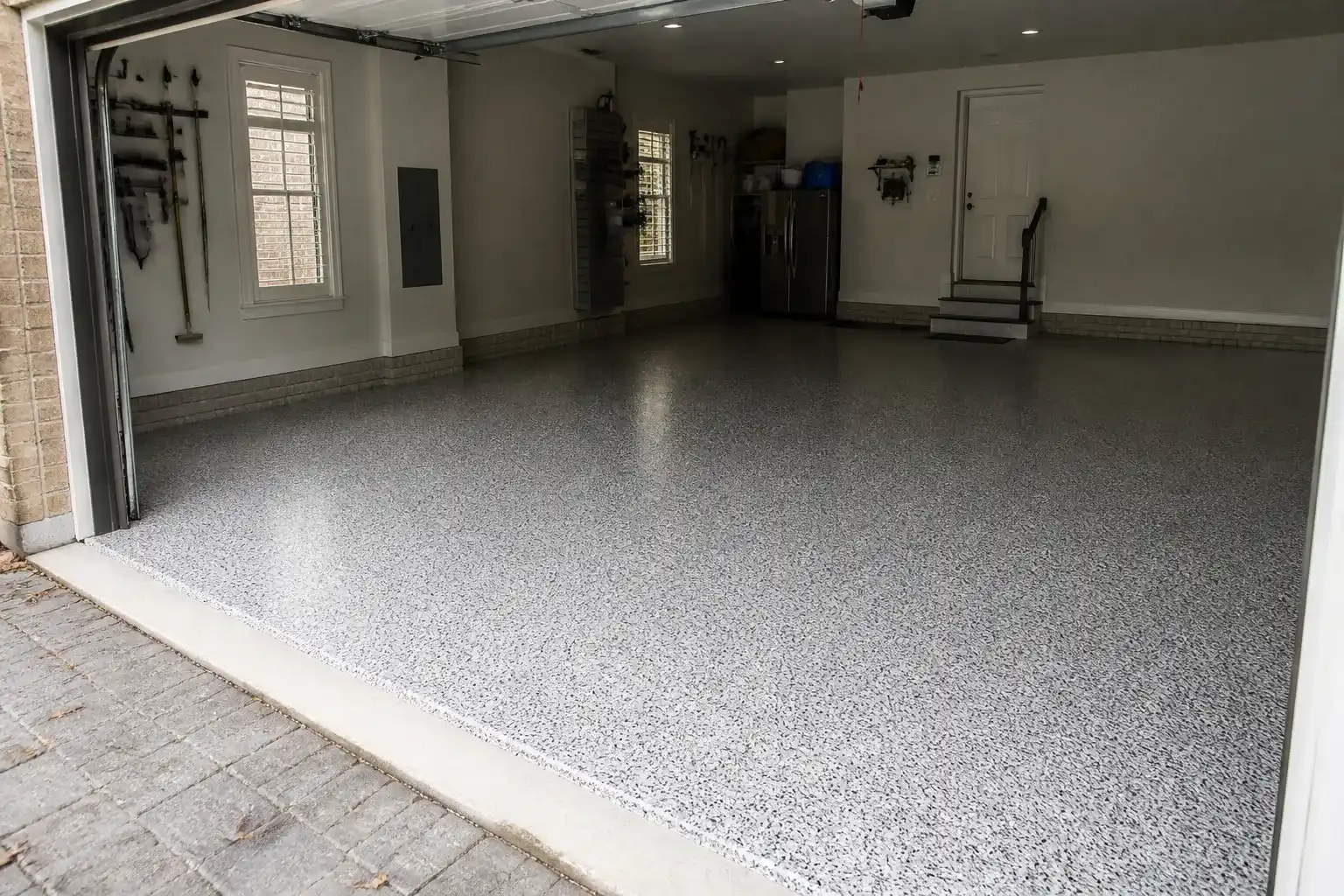
Alpharetta Floor Coating installs garage, concrete and industrial floor coatings for homeowners and businesses across Alpharetta, GA. Epoxy, polyurea, and polyaspartic coatings can all protect concrete, but they do not perform the same way. The right choice depends on your floor condition, desired finish, installation window, and how you use the space.
Epoxy floor coatings
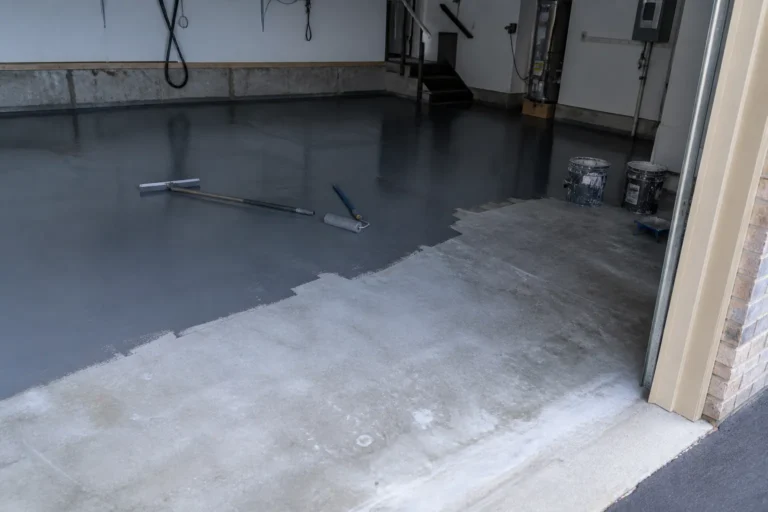
Epoxy is a well-known resin coating that can create a durable, attractive surface. It is often selected for decorative options and can be a practical choice in controlled indoor environments. Epoxy typically needs more time to cure and can be more sensitive to moisture and temperature during installation.
Polyurea floor coatings
Polyurea is valued for flexibility, impact resistance, and fast curing. Its flexibility can help it handle normal concrete movement better than a more rigid coating. Because it cures quickly, careful professional application and surface preparation are especially important.
Polyaspartic floor coatings
Polyaspartic is a type of polyurea chemistry often used as a high-performance topcoat or full coating system. It is commonly chosen for its UV stability, fast return-to-service potential, and clean finish. These systems are often a good fit for garages and other spaces that receive daylight.
How to choose
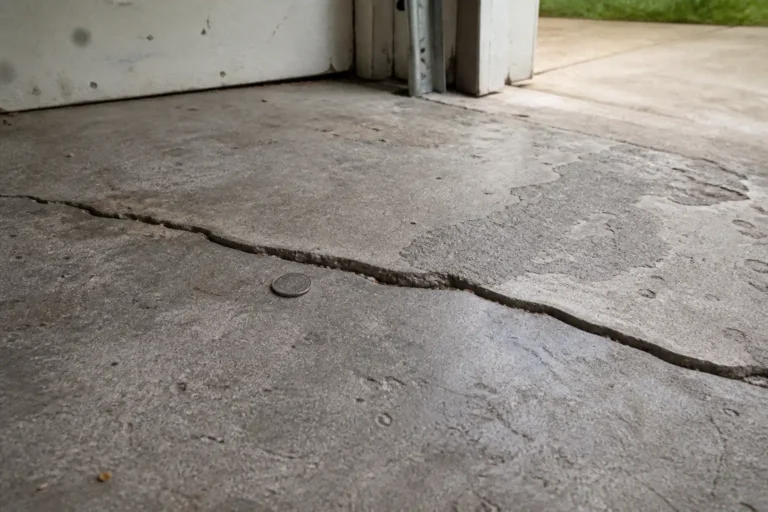
Start with the concrete condition, sunlight exposure, desired appearance, and how quickly you need the area back in use. A professional evaluation can also identify moisture, cracks, or contamination that must be addressed before coating.
Alpharetta Floor Coating can help you compare coating systems for your garage, workshop, basement, patio, or commercial space.
Side by side in plain words
- Epoxy: A common base coat. It offers good build and a wide choice of finishes. It usually needs more time to cure.
- Polyurea: Known for fast cure times and strong performance. It needs a trained crew because it sets quickly.
- Polyaspartic: Often used as a topcoat. It cures fast and can resist wear and light.
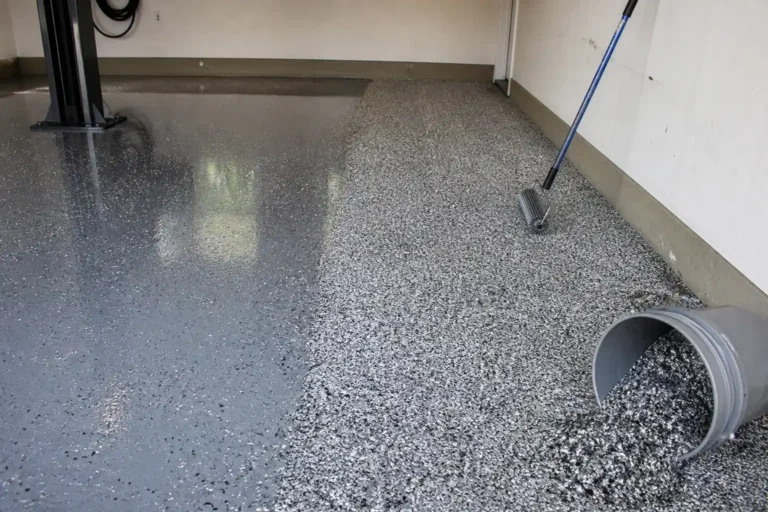
Many floors use a mix, such as an epoxy base with a polyaspartic topcoat, to balance cost, time, and protection.
Match the system to your garage
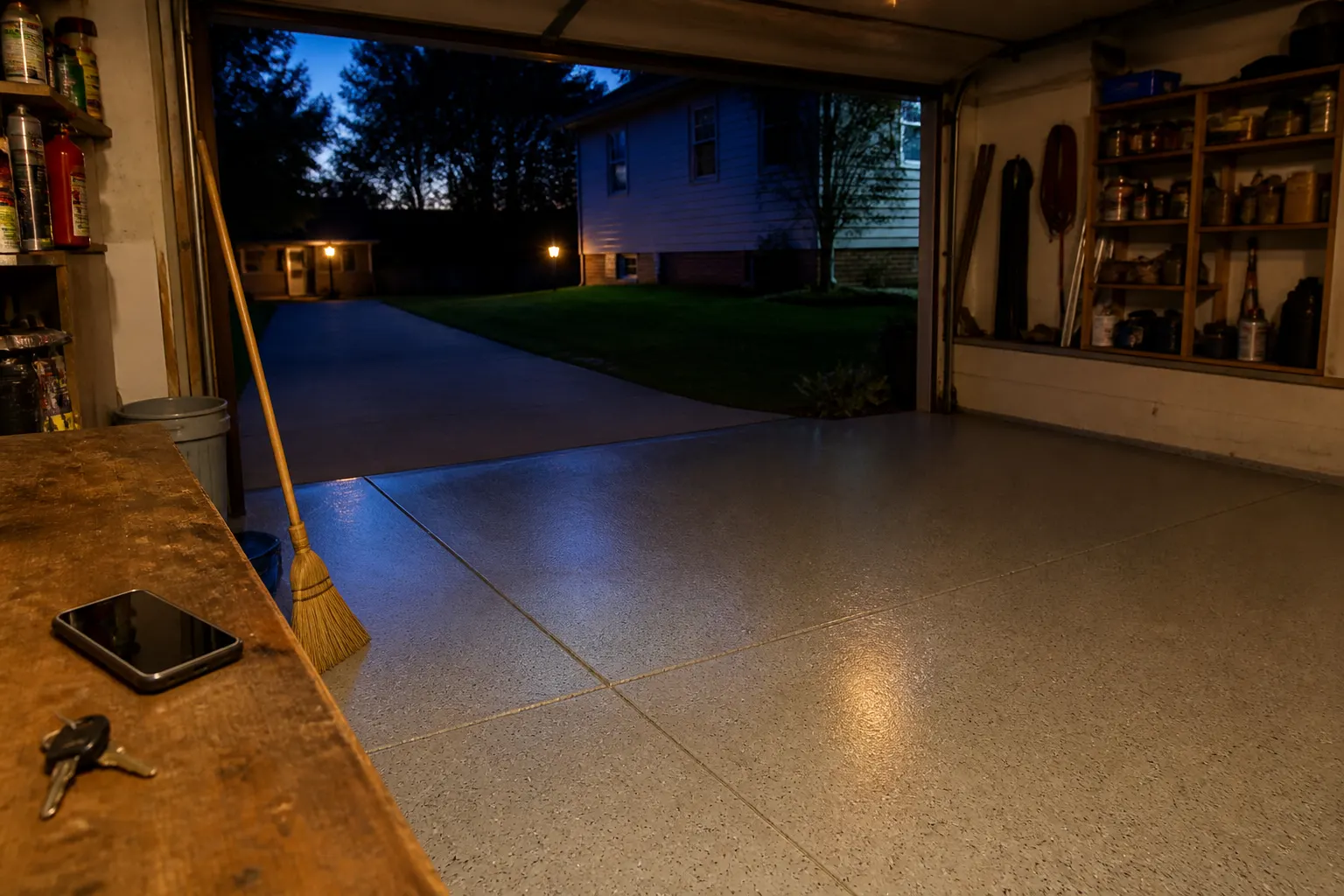
A family garage with daily parking needs a tough topcoat. A workshop needs a floor that handles dropped tools and spills. A showroom or entertainment space may care most about looks. Tell your installer how you use the space, and ask for a recommendation with reasons.
Heat and humidity matter
In Alpharetta’s warm, humid climate, the install day can affect how a coating cures. Ask how the installer plans for heat, humidity, and moisture in the slab. A good answer is specific. A vague answer is a reason to keep asking questions.
What each one does well
Epoxy is known for strong build and a wide range of finishes, and it often costs less to install than faster systems. Polyurea and polyaspartic are known for quick curing and strong wear resistance. Used together, they can balance time and protection. Ask your installer which layers they would use and why.
When the floor will be ready
Cure times vary. A fast-curing system may be ready for light use sooner, while a standard epoxy system needs more time. Ask for a written schedule so you know when you can walk, move items back, and park.
Do not skip the base
No topcoat can save a poorly prepared slab. Preparation, moisture checks, and crack repair matter more than the product label. If a proposal is short on details about prep, ask for more.
Common questions homeowners ask
Is one always best? No. The right choice depends on the slab, the use, the weather, and the install conditions.
Can I mix them? Yes. Many floors use an epoxy base with a faster-curing topcoat.
Will it peel? Any coating can peel if the prep was poor or moisture was ignored. That is why the plan matters more than the brand.
How to compare proposals
Ask each company to list the layers, the products, the prep steps, the cure time, and the warranty. Then line them up. Differences will show up fast, and you can ask about each one.
Think about the long run
The cheapest system is not always the cheapest choice over time. A floor that needs early repair costs more than one that was built right. Ask each installer how they expect the floor to look and perform after a few years of use.